Fresh fruits and vegetables provide fiber, vitamins, minerals, antioxidants, and other nutrients that support overall health. Because many types of produce are eaten raw, food safety matters too.
Produce can pick up germs through soil, water, transportation, handling, storage, or preparation. According to the CDC’s food safety guidance, fruits and vegetables can carry germs that cause foodborne illness. Fortunately, a few simple habits can help you lower your risk without making healthy eating complicated.
A Quick Produce Safety Checklist
Start with these basics whenever you buy and prepare fresh fruits and vegetables:
- Inspect before buying. Choose produce that looks fresh and avoid items with obvious bruising, cuts, or damage.
- Keep cold foods cold. The FDA recommends buying pre-cut or packaged produce only when it is refrigerated or kept on ice.
- Separate produce from raw animal foods. Keep fruits and vegetables away from raw meat, poultry, and seafood in your cart, grocery bags, refrigerator, and food-preparation area.
- Wash your hands first. Use soap and water for at least 20 seconds before handling food.
- Clean your work area. Make sure knives, cutting boards, sinks, and countertops are clean before preparing produce.
- Refrigerate promptly. Keep your refrigerator at 40°F or below and refrigerate cut, peeled, or perishable produce promptly.
How to Wash Fresh Produce
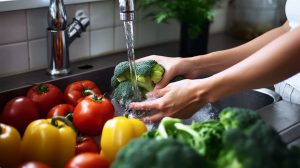
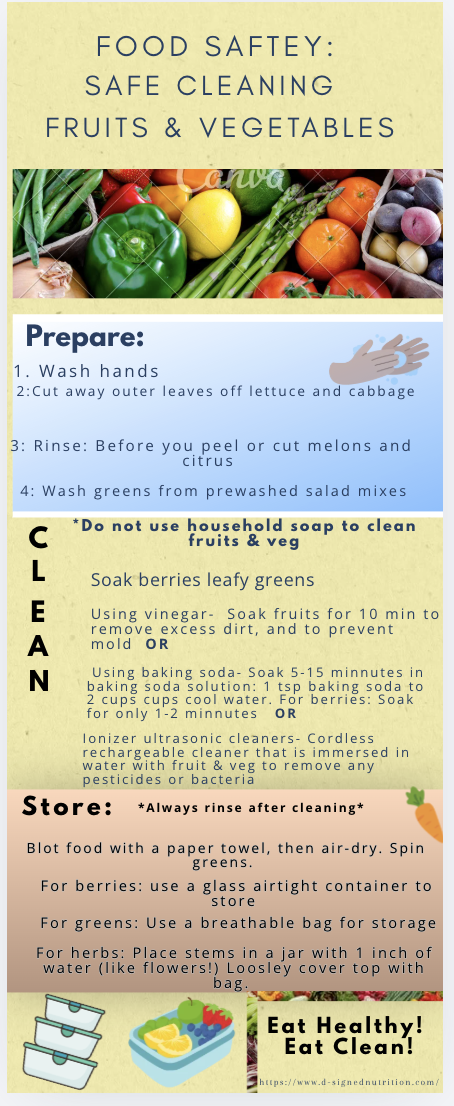
For everyday cleaning, the FDA recommends washing fresh fruits and vegetables under clean running water. Household soap, detergent, bleach, and other household cleaners should not be used on produce.
For a simple routine:
- Wash your hands before touching the produce.
- Remove damaged areas and discard outer leaves from lettuce or cabbage when needed.
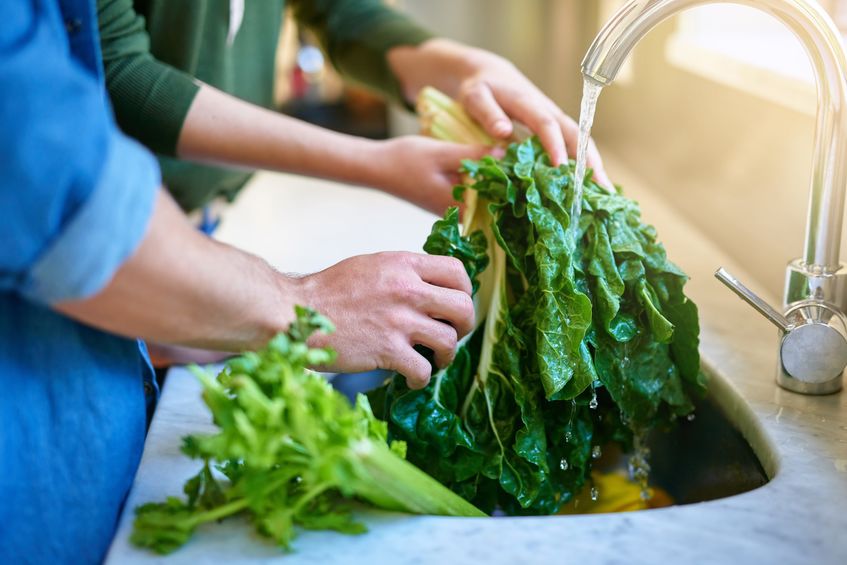
- Rinse under running water while gently rubbing the surface with your hands.
- Scrub firm produce such as melons or cucumbers with a clean produce brush.
- Rinse before peeling or cutting. This helps prevent your knife or hands from transferring germs from the outside to the edible portion.
- Dry with a clean towel or paper towel if desired before storing or serving.
What About Vinegar or Baking Soda?
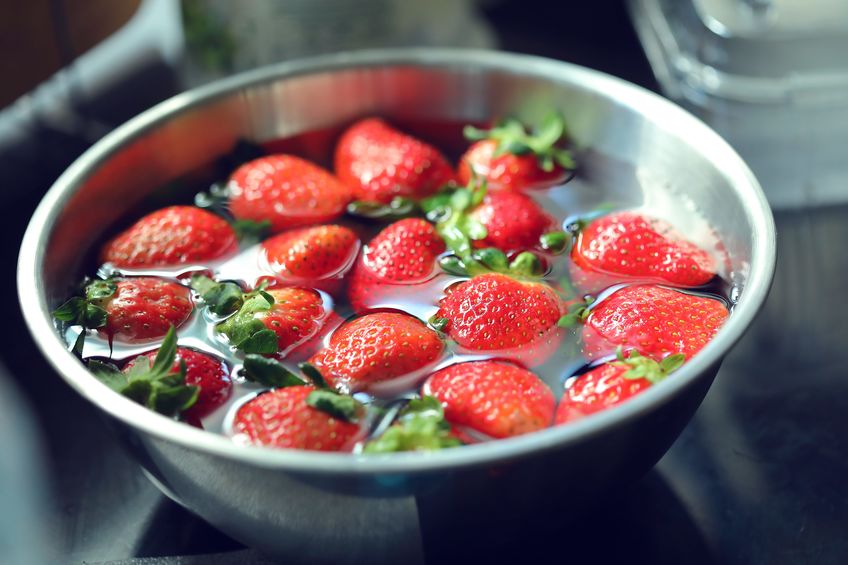
Some people prefer an additional cleaning step, particularly for berries, leafy greens, or produce that holds visible dirt. At home, common options include a diluted vinegar soak or a baking soda soak followed by a thorough rinse.
If you choose to use one of these methods:
- Vinegar soak: Soak produce in a diluted vinegar solution for about 10 minutes, then rinse thoroughly under clean running water.
- Baking soda soak: Soak produce in a baking soda-water solution for several minutes, then rinse thoroughly.
- Delicate produce: Avoid soaking berries and other delicate items for too long, since it may affect their texture and quality.
These methods can be part of your personal produce-cleaning routine, but the FDA and CDC continue to recommend running water as the standard method for washing fresh produce. No home cleaning method can guarantee removal of every contaminant.
Can You Use a Fruit and Vegetable Cleaning Device?
Another option some people use at home is a fruit and vegetable cleaning device. These countertop or portable devices may use technologies such as water circulation, ultrasonic cleaning, or ion-based systems, depending on the product.
At D-Signed Nutrition, we recommend a fruit and vegetable cleaning device at home as an additional step in your produce-cleaning routine. If you decide to use a device, follow the manufacturer’s directions carefully and use it as part of an overall food-safety routine rather than as a replacement for good handwashing, clean preparation surfaces, proper refrigeration, and safe handling.
Do You Need to Wash Produce You Plan to Peel?
Yes. Even if you will not eat the peel, rinse the produce first.
When you slice a melon, avocado, cucumber, or orange, your knife and hands touch the outside before reaching the inside. Germs on the surface can potentially be carried onto the edible portion. That is why the FDA recommends rinsing produce before peeling or cutting.
What About Pre-Washed Lettuce and Bagged Greens?
Look at the package before heading to the sink.
- If it says “pre-washed” or “ready-to-eat,” the FDA says it can be eaten without washing it again.
- If you prefer to rinse it anyway, make sure your hands, sink, utensils, and countertops are clean first.
- Keep packaged greens refrigerated and follow any storage instructions on the label.
Prevent Cross-Contamination After Washing
Cleaning produce is only one part of food safety. What happens afterward matters just as much.
The CDC recommends four basic food safety principles: clean, separate, cook, and chill. In your kitchen, that means:
- Use separate cutting boards for produce and raw meat, poultry, or seafood when possible.
- Wash knives, cutting boards, countertops, and dishes with hot, soapy water between uses.
- Do not put washed produce back onto a dirty surface or into a container that previously held raw animal products.
- Refrigerate cut or peeled produce promptly.
When Does Cooking Matter?
Cooking vegetables can kill harmful bacteria and reduce the risk of foodborne illness, but most people do not need to avoid raw produce altogether. Properly selected, washed, stored, and handled fruits and vegetables can still be an important part of a nutritious diet.
Certain groups do need to take extra care. Adults 65 and older, children under five, pregnant women, and people with weakened immune systems are among those the CDC considers at higher risk for foodborne illness. If you are in a higher-risk group, ask your healthcare team whether you should take additional precautions.
Get Personalized Nutrition Guidance
Fruits and vegetables provide valuable nutrients and fiber, including fiber that supports gut health and digestive wellness. The goal is not perfection. It is having practical food-safety habits that allow you to enjoy nutritious foods with confidence.
Healthy eating is not one-size-fits-all. Your medical history, digestive health, medications, lifestyle, nutrient needs, and personal goals can all affect what an appropriate eating plan looks like for you.
At D-Signed Nutrition, we take an individualized, evidence-informed approach to nutrition. Rather than adding more confusion to your plate, we help you understand your body’s unique needs and create realistic strategies that fit your health and lifestyle.
If you are ready for personalized support, book an appointment with a Registered Dietitian Nutritionist online today. Our team can help you build a nutrition plan designed around your individual needs.
Leave a Reply
You must be logged in to post a comment.